
Brand Guidelines
Purpose
The PyTorch Foundation is the vendor-neutral home for open source software across the AI model lifecycle: the tools developers use to train, optimize, serve, distribute, and run models across heterogeneous hardware.
Consistent use of our design patterns, logos, and other assets helps people easily identify PyTorch Foundation-branded properties and protects our trademarks. It is important that marketing materials comply with these standards and use assets correctly. Please note that any and all use of PyTorch Foundation’s trademarks must comply with Linux Foundation’s Trademark Usage Guidelines in addition to these visual branding guidelines.
Logo
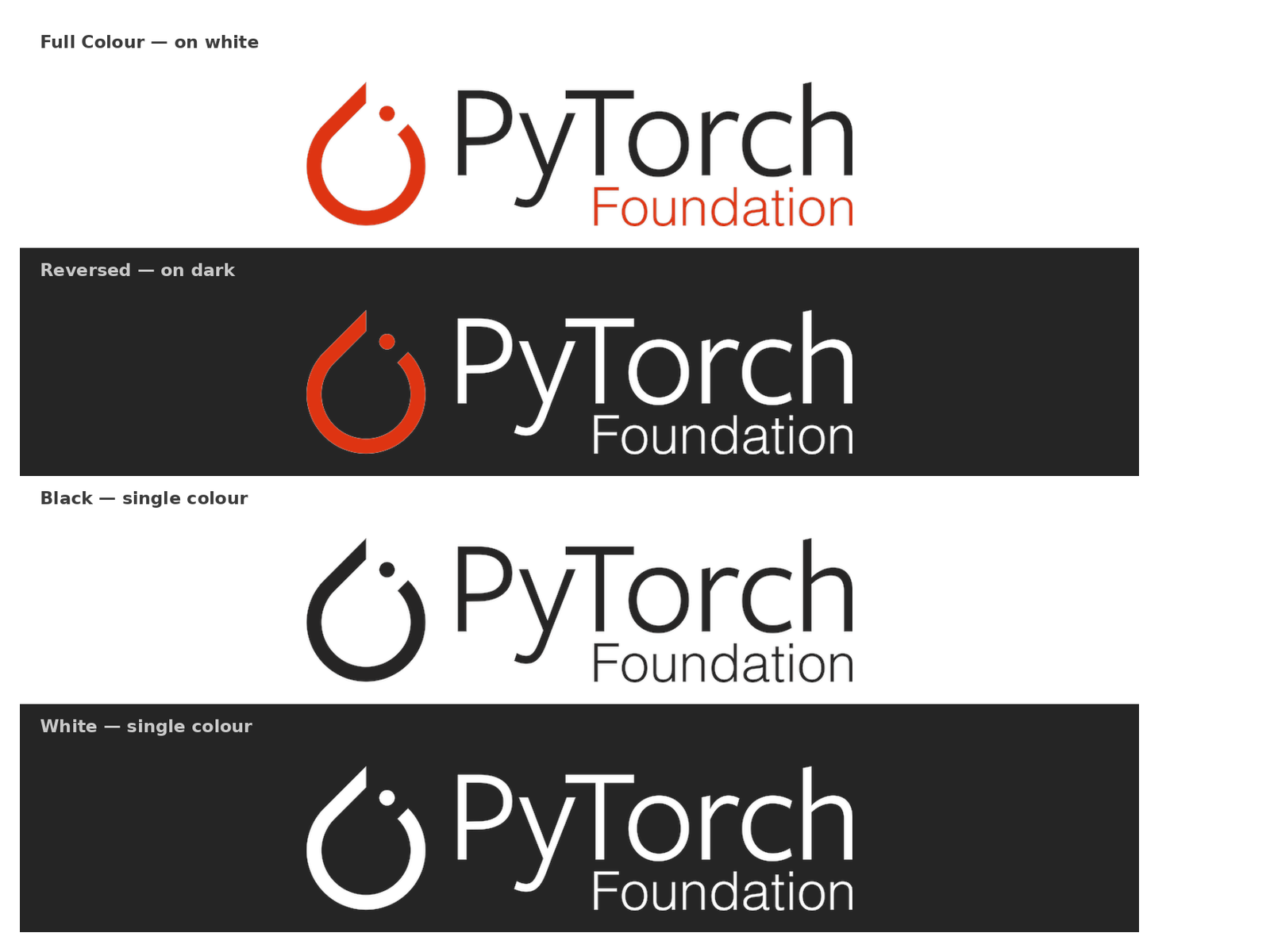
Our logo is composed of two core elements: the symbol and the logotype. They combine in a fixed relationship to form our primary logo. This is the most complete and recognizable expression of our identity, and should be used as an introduction to the brand. It is important that it is always used the right way so that people are able to identify us at a glance.
When in doubt, default to this primary logo.
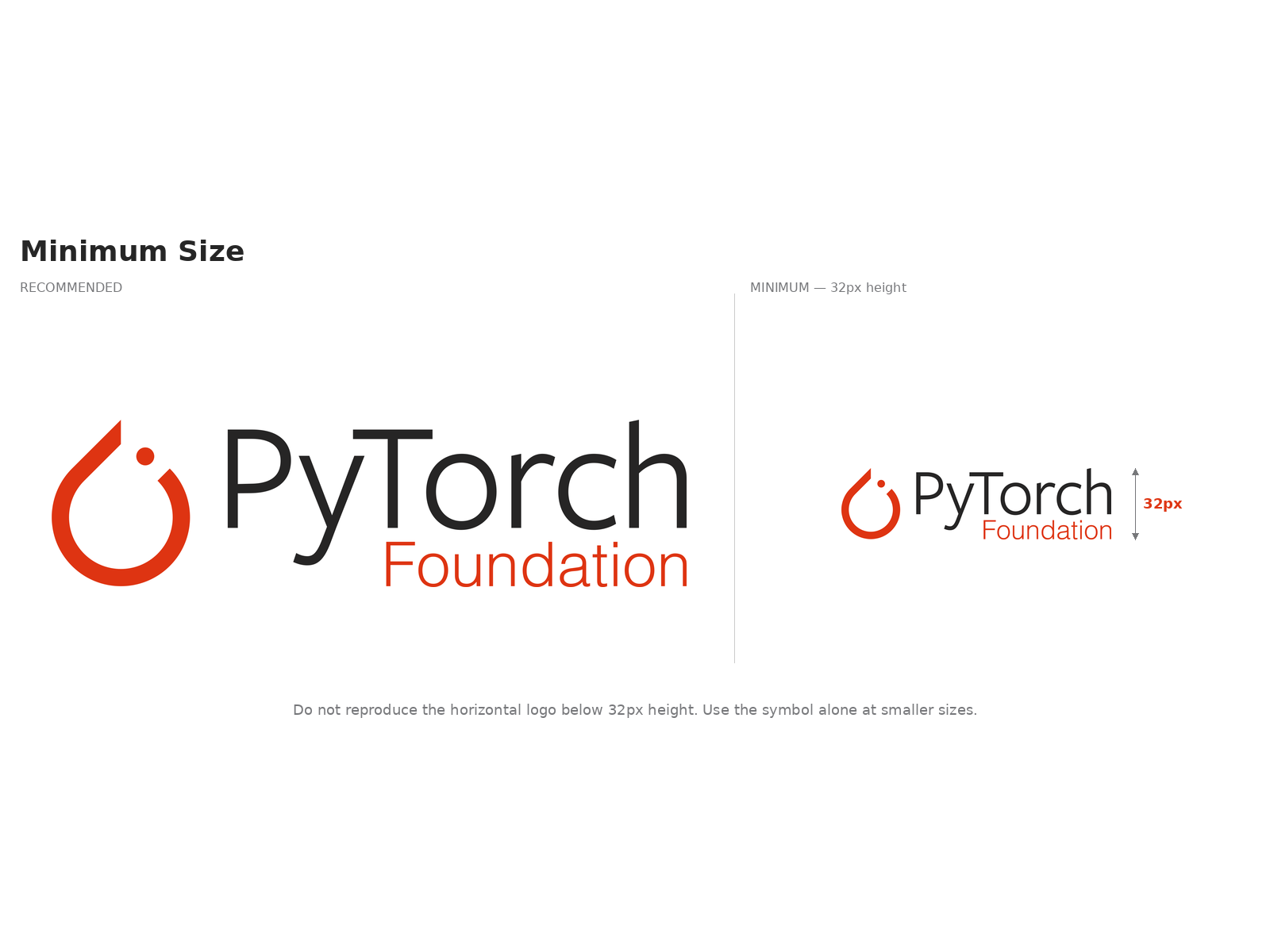
Logo Scaling
The PyTorch Foundation logo lockups should never appear smaller than 32 pixels in height. This minimum size preserves legibility and ensures the integrity of the lockup. When space is limited, use just the symbol instead, which is designed for clear recognition at smaller scales.
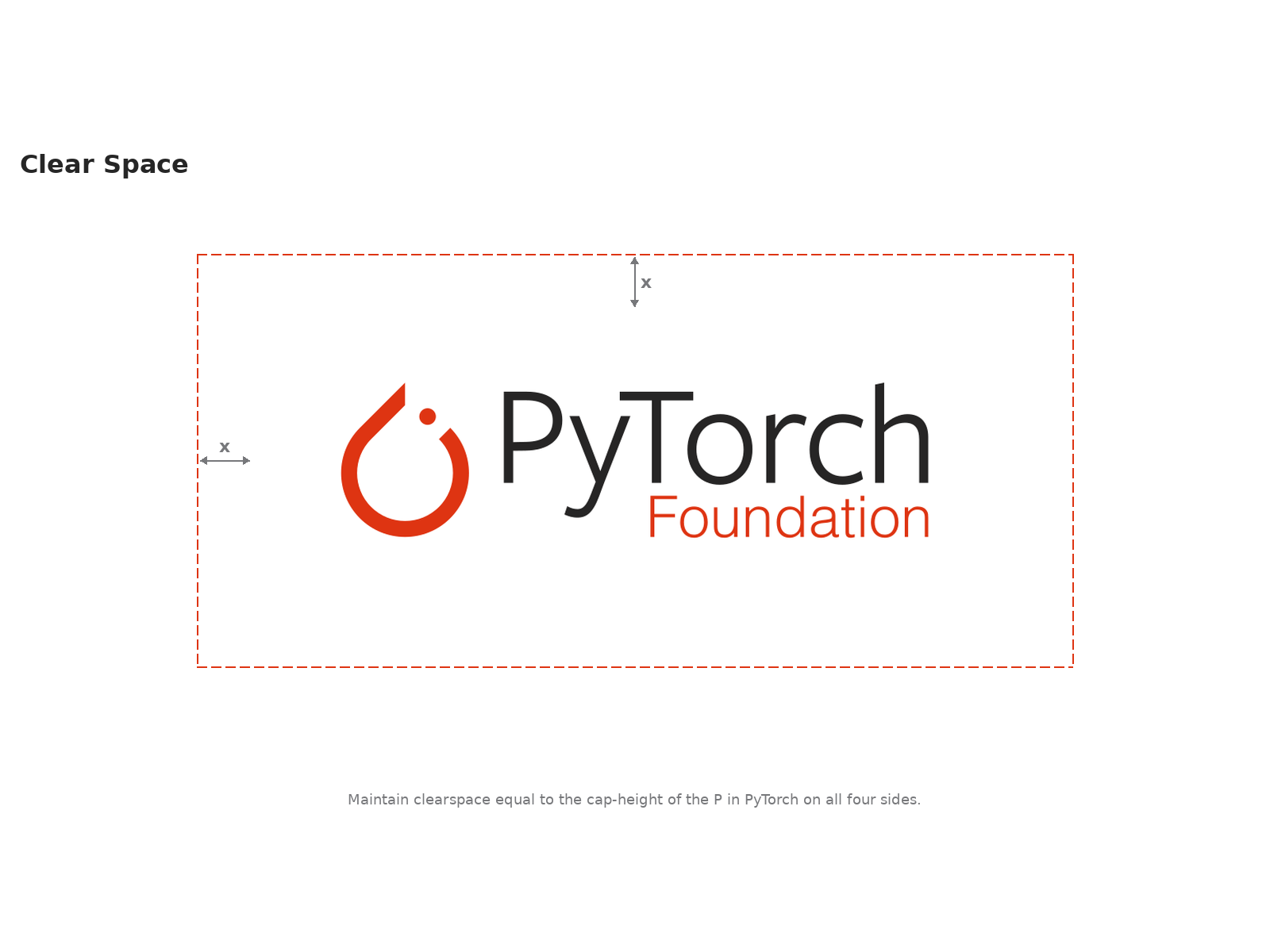
Clearspace
Our logo needs breathing room to maintain its impact and clarity. Maintain a minimum distance defined by continuing the grid an additional layer. Apply this equal spacing around all sides to preserve integrity across every application and ensure the logo never feels crowded. This applies to the symbol as well as logo lockups.
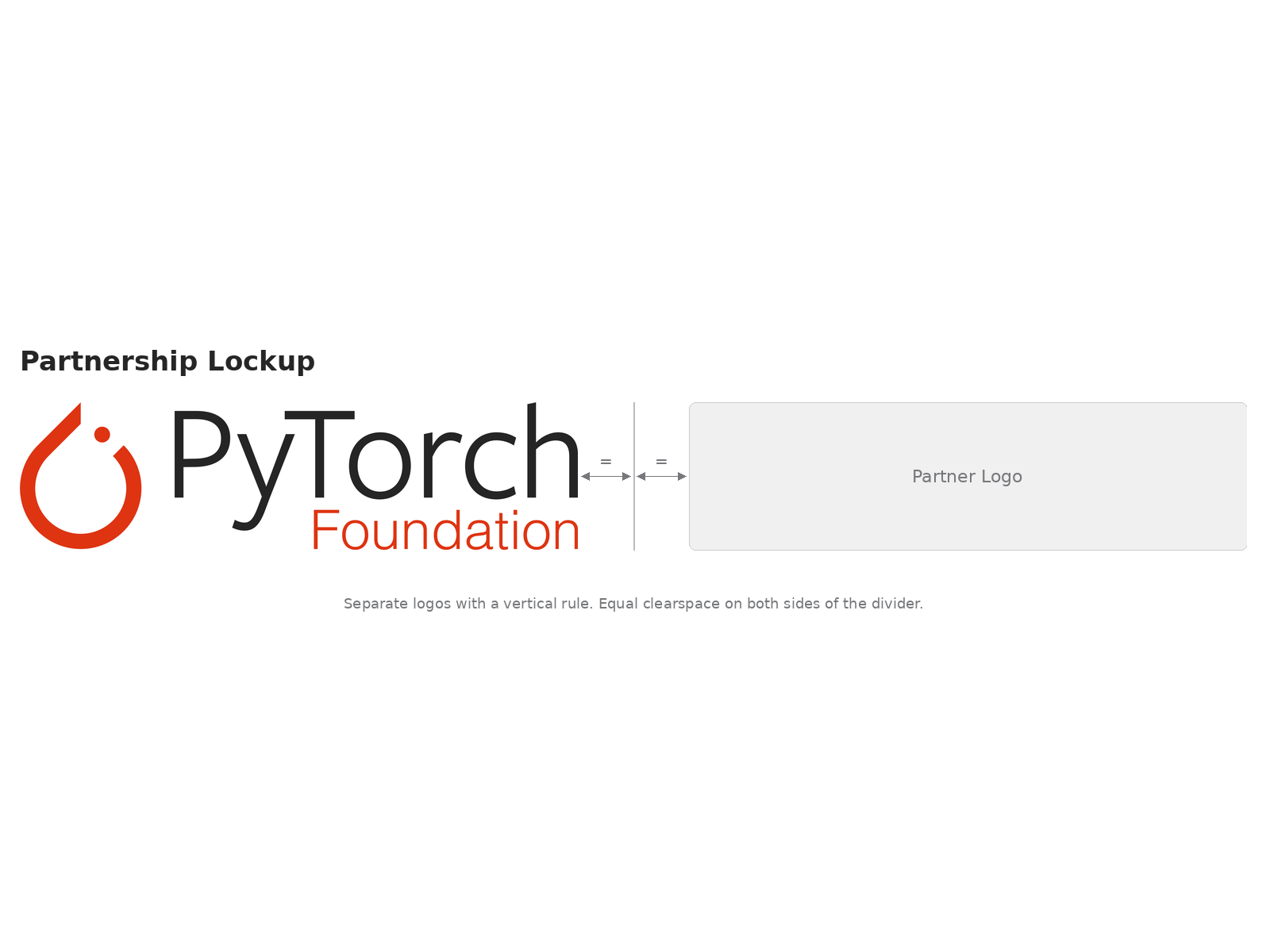
Partnership Lockups
For simple partnership lockups, we pair our logo with a partner’s logomark, symbol, or icon. Use our logo’s height as the foundation for all measurements, separating elements with a vertical bar that’s 1.5x the symbol’s height. Create breathing room by maintaining the minimum clearspace between each element to ensure both brands feel equally present and respected.
Watchouts
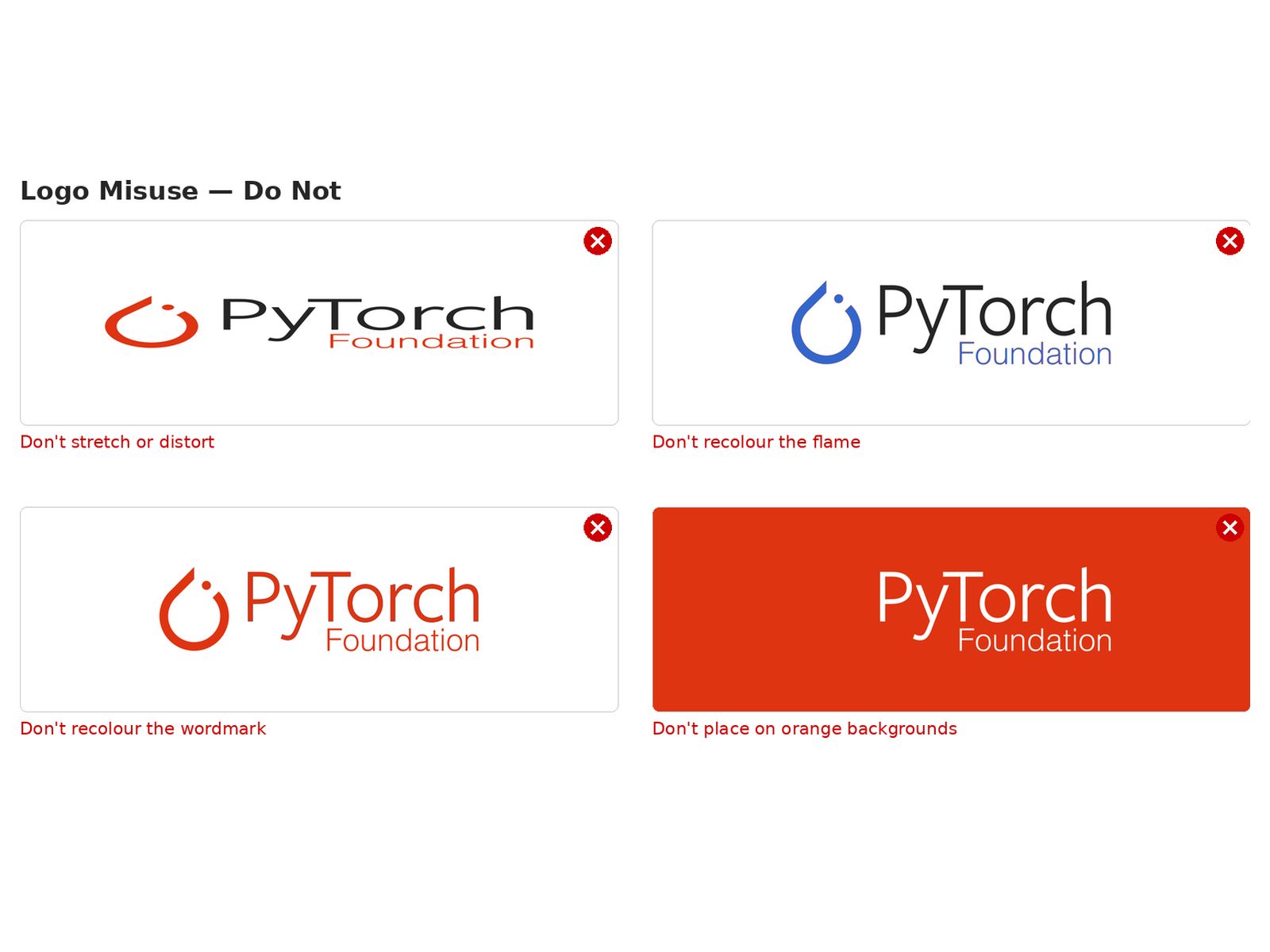
To preserve the integrity and effectiveness of our brand, it’s crucial to use the our logo consistently and as intended. The following examples illustrate common misuses to avoid.
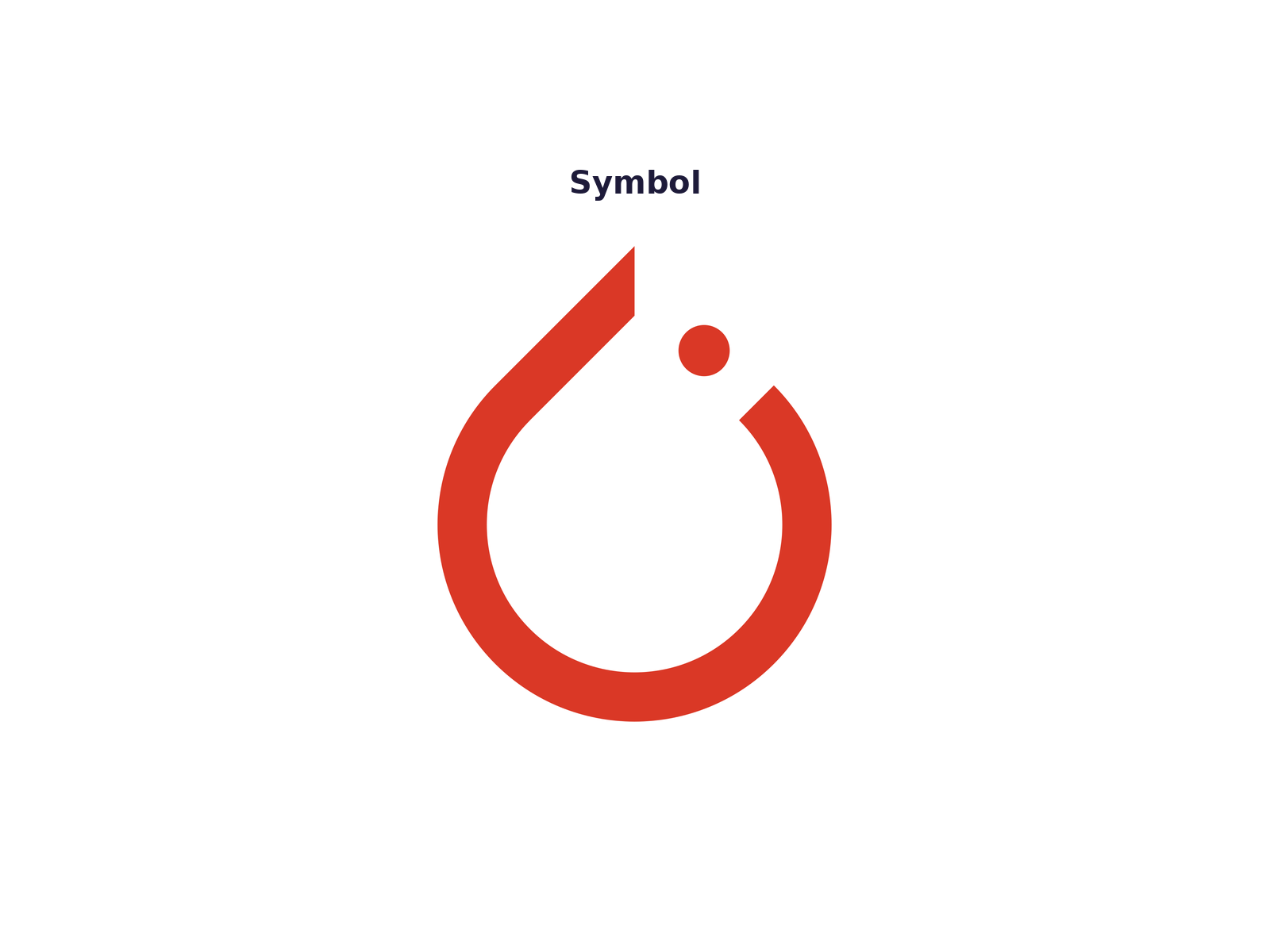
Symbol
Our symbol is the PyTorch Foundation mark — a circular arc with an open gap at the top and a small dot, forming a precise, balanced emblem that signals continuity, momentum, and control. It is drawn from the same visual logic as the framework itself: simple on the surface, considered underneath.
The symbol may be used independently as a shorthand for the brand in contexts where a full lockup is not practical — social media avatars, app icons, favicons, or small-scale applications. It may also appear on select merchandise where a standalone graphic mark creates greater impact than the full logo.
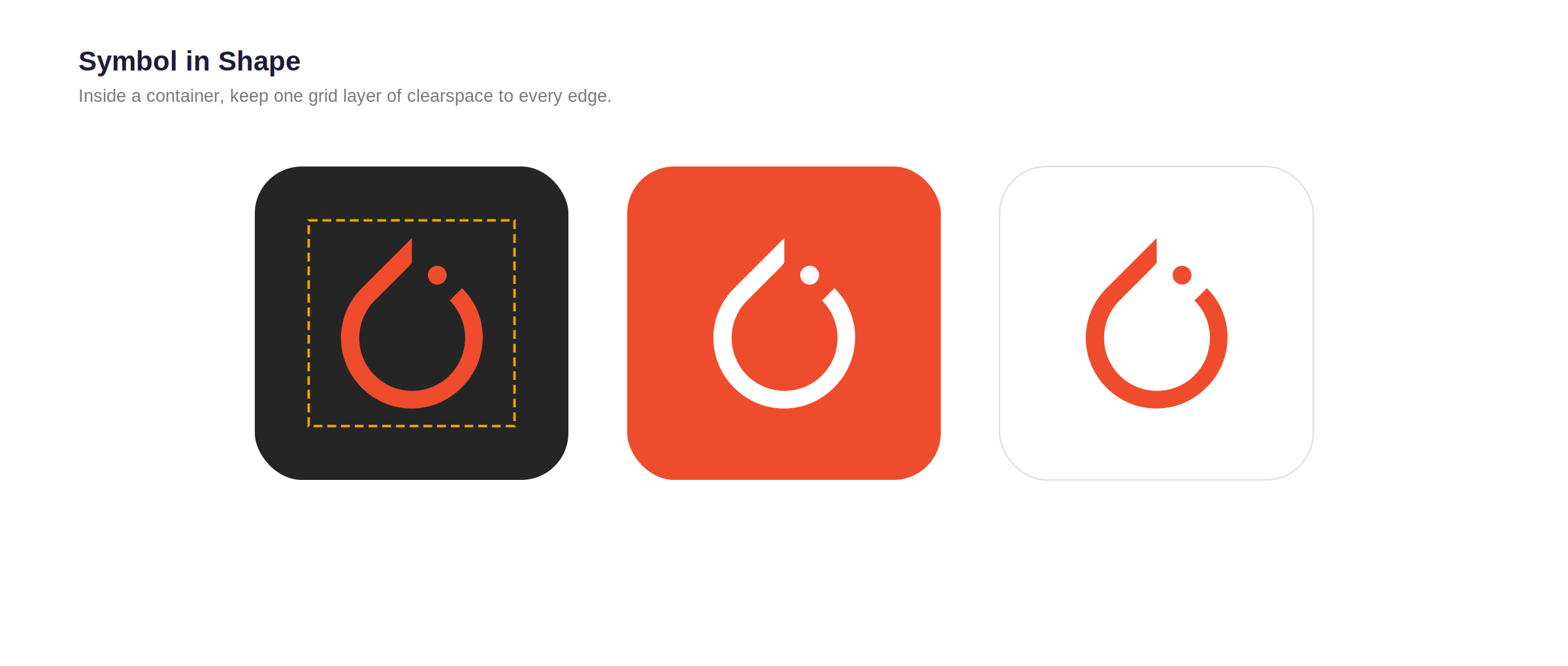
Symbol in Shape
For applications such as social media avatars, app icons, or other contained uses, the symbol may appear within a geometric shape. When placing the symbol inside a shape, follow the established clearspace rule and maintain an additional grid layer between the mark and the edge of the shape.
Primary Palette
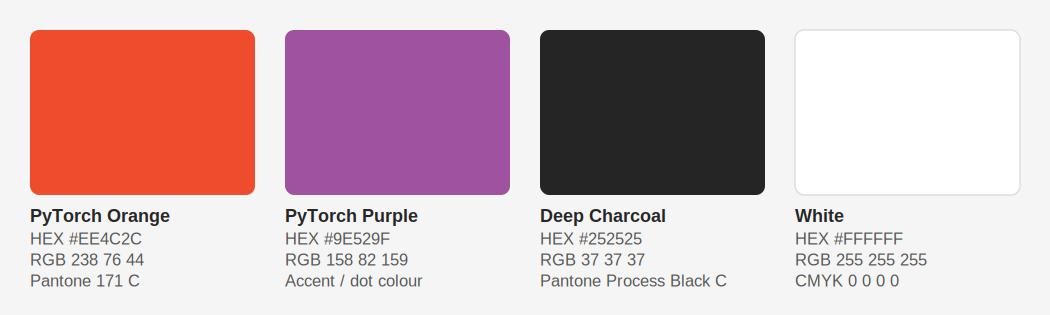
Our primary palette is built around PyTorch Foundation Orange, Deep Charcoal, and White. PyTorch Foundation Orange is the most distinctive element of the brand — it carries energy and immediacy, and should be used deliberately as an accent, not a fill. Charcoal and white form the high-contrast foundation that keeps all communications legible, clean, and grounded.
Use these colours consistently across all brand touchpoints. When in doubt, default to charcoal on white with orange used sparingly for emphasis.
Secondary Palette
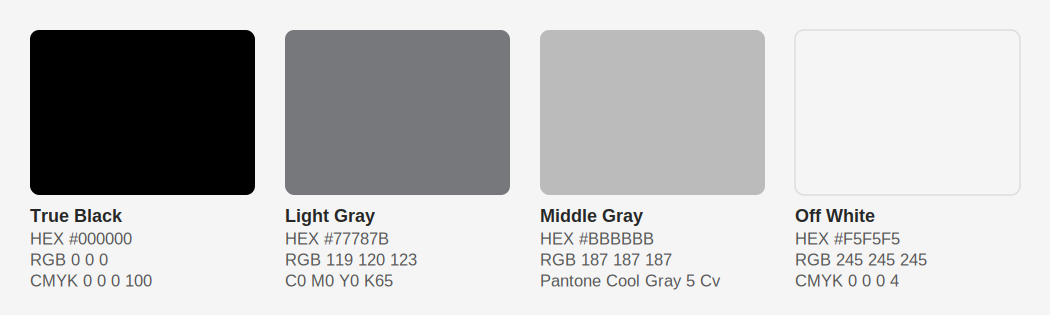
Our secondary palette extends the primary with a deeper orange tint (Ember) and a range of grays — Cool Gray, Stone Gray, and True Black. These tones provide flexibility for backgrounds, supporting text, dividers, and UI surfaces without competing with the primary palette.
Use secondary colours to add depth and hierarchy, not as substitutes for the primary palette in brand-prominent contexts.
Typography
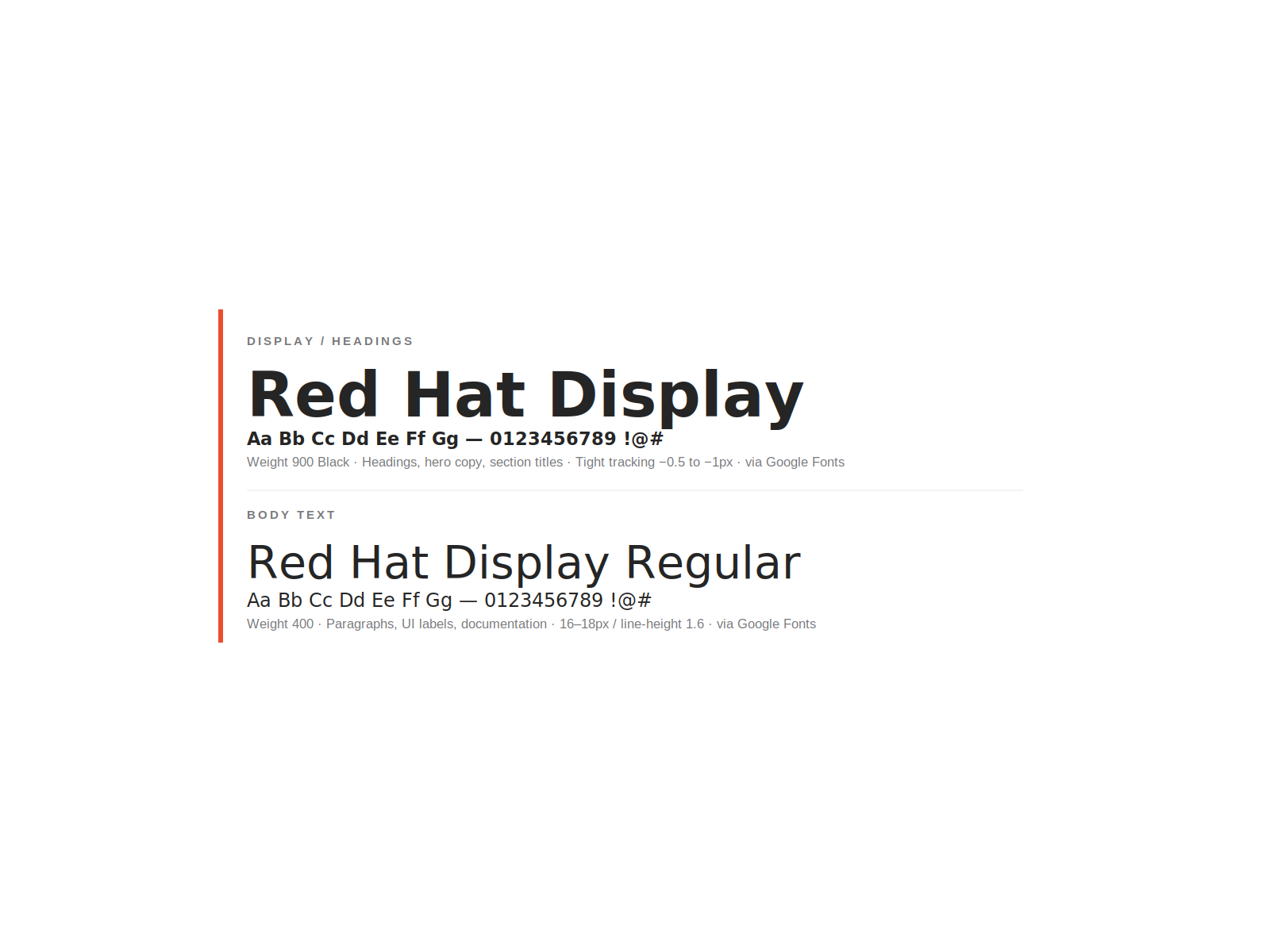
Our typographic system is built entirely around Red Hat Display — an open source humanist sans-serif that balances technical seriousness with approachability. It performs well at every scale, from large display headings to compact UI labels.
Red Hat Display Black (weight 900) is used for headings and hero copy. Red Hat Display Regular (weight 400) serves body text, documentation, and UI labels. No secondary typeface is required; the family’s weight range provides sufficient range for all typographic needs.
Our typographic scale is derived from doubling the root numbers 8, 9, 10, 12, and 16 — generating a natural progression of 8, 16, 32, 64, 128. This produces a comprehensive scale with precise options for every context, from fine print to hero type.
Legal
By using PyTorch Foundation brand materials you agree to the Linux Foundation Terms of Use, the Trademark Usage Guidelines, these PyTorch Foundation branding guidelines, and all PyTorch Foundation rules and policies as may be updated from time to time. You also acknowledge that PyTorch Foundation is the sole owner of PyTorch Foundation trademarks, promise not to interfere with PyTorch Foundation’s rights in them, and acknowledge that goodwill derived from their use accrues only to PyTorch Foundation. PyTorch Foundation may review use of the branding materials at any time and reserves the right to terminate or modify any use.
In general
For those using PyTorch Foundation brand materials on a site external to PyTorch Foundation, please don’t use our name, logos, or screenshots (“brand materials”) in ways that may be confusing, misleading, or suggest our sponsorship, endorsement, or affiliation. For example, your name and logo should be more prominent than the Agentic AI Foundation name or logo. And please don’t edit or change the PyTorch Foundation logo — we like it how it is!
Advertising, promotional, and sales materials
Please check in with us before using our logo on websites, products, packaging, manuals, or for other commercial or product use. It’s ok to say in text “Member of the Agentic AI Foundation” or “PyTorch Foundation Member” (as long as it’s true!)
Education and instruction (books, guides, publications, and conferences)
You can use our brand materials for educational and instructional purposes but please remember that it shouldn’t be confusing, misleading, or suggest our sponsorship. For example, we generally don’t allow use of our logos or screenshots on book covers.
Also remember to include this statement (or something like it) in your printed materials: “[Title] is not affiliated with or otherwise sponsored by PyTorch Foundation.”
Products, websites, names, and logos
Please don’t use our name as a part of your company or service name, website name, trade name, or product name. Don’t use our logo or incorporate our logo into yours. Don’t use a domain name containing “PyTorch” or any confusingly similar words.
Linking to PyTorch Foundation
If you want to promote your organizations affiliation with PyTorch Foundation you can use our logo if it meets our guidelines. For example, “[Company Name] is a member of [linked logo].”
Merchandise
While we do produce lots of t-shirts for our events that have our logo on them, we don’t generally allow third parties to make, sell, or give away anything with our name or logo on it.
Attribution
Please include appropriate attribution of PyTorch Foundation’s ownership of its trademarks when you use them. This attribution notice can be included in the fine print at the bottom of your content. An example is, “PyTorch Foundation and the PyTorch Foundation logo design are registered trademarks of the Linux Foundation.”
More questions?
Feel free to email questions to marketing@pytorch.org. It helps if you send a mockup of your intended use so we can be specific in our response. We’ll do our best to get back to you ASAP but please give us two weeks (please note that no response doesn’t mean approval.) We’re currently only able to respond to inquiries made in English.