
NeurIPS 2025 brought together researchers, engineers, maintainers, and ecosystem contributors from across the AI community. PyTorch Foundation participated throughout the week with workshops, talks, posters, a co-hosted community reception, and a booth in the Exhibit Sponsor Hall alongside Cloud Native Computing Foundation.
Open Source AI Reception
PyTorch Foundation and the Cloud Native Computing Foundation co-hosted the Open Source AI Reception with support from Anyscale, Featherless, Hugging Face, and Unsloth. The evening brought together AI researchers, maintainers, and community contributors for conversations focused on open source collaboration.
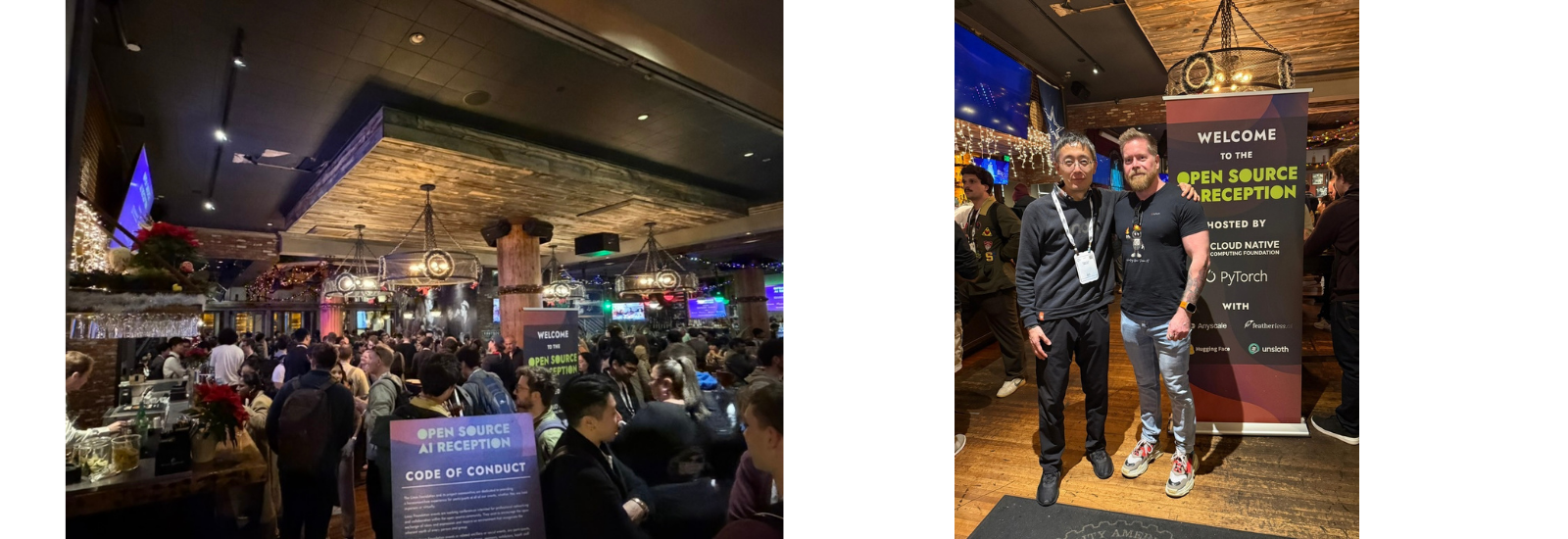 Matt White (PyTorch Foundation) & Steve Liu (MBZUAI)
Workshops & Technical Sessions
Agentic Development at the Frontier (December 2)
Speakers: Joe Spisak, Davide Testuggine, Aksel Joonas Reedi, Zach Wentz, Daniel Han, Sanyam Bhutani
“With over 1,000 attendees, the energy around PyTorch-native agentic development workshop was undeniable — a clear signal that PyTorch is becoming the foundation for building, training, and deploying the next generation of agentic AI systems.” Joe Spisak, Product Director – Meta Super Intelligence Lab.

Joe Spisak, Meta
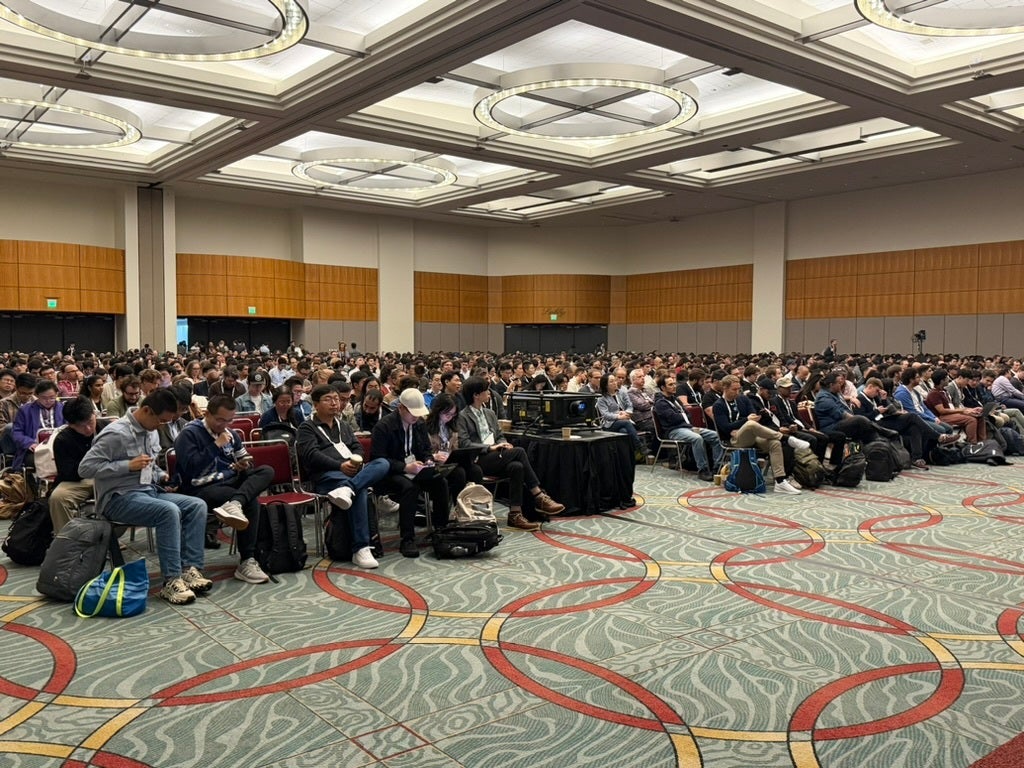
On Device and Edge AI (December 3)
Speakers: Cagatay Bilgin, Matthias Lecher, Andrey Tovchigrechko, Varun Khare, Vijay Janapa Reddi, Karan Goel, Mitesh Patel
Speaker: Matt White & Mahdi Ghodsi
“In essence, we discussed a framework for Modular Agentic AI, showcasing how orchestrating small, specialist models can create systems that are significantly more reliable and auditable compared to massive monolithic LLMs. By separating reasoning, memory, and execution into distinct layers, we can achieve true autonomous workflows.
However, architecture is only part of the equation. We emphasized that this ecosystem must be built on open standards and open hardware. The future of AI infrastructure hinges on the community’s commitment to open-source protocols that run efficiently on open, accessible compute.” — Mahdi Ghodsi
Workshop Posters
Workshop: Evaluating the Evolving LLM Lifecycle – Benchmarks, Emergent Abilities, and Scaling (December 7)
Paper: Evaluation and Benchmarking Suite for Financial Large Language Models and Agents
Authors: Shengyuan Lin, Jaisal Patel, Qinchuan Zhang, Kaiwen He, Keyi Wang, Yan Wang, Matt White, Kairong Xiao, Xiao-Yang Liu
Paper Link: https://openreview.net/forum?id=sSY4h3MFUB
Workshop: Regulatable ML (December 7)
Paper: The Model Openness Framework: Promoting Completeness and Openness for Reproducibility, Transparency, and Usability in Artificial Intelligence
Authors: Matt White, Cailean Osborne, Xiao-Yang Liu, Keyi Wang, Sachin Mathew Varghese
Paper Link: https://openreview.net/forum?id=J93bDj1FRy

Exhibit Hall Presence
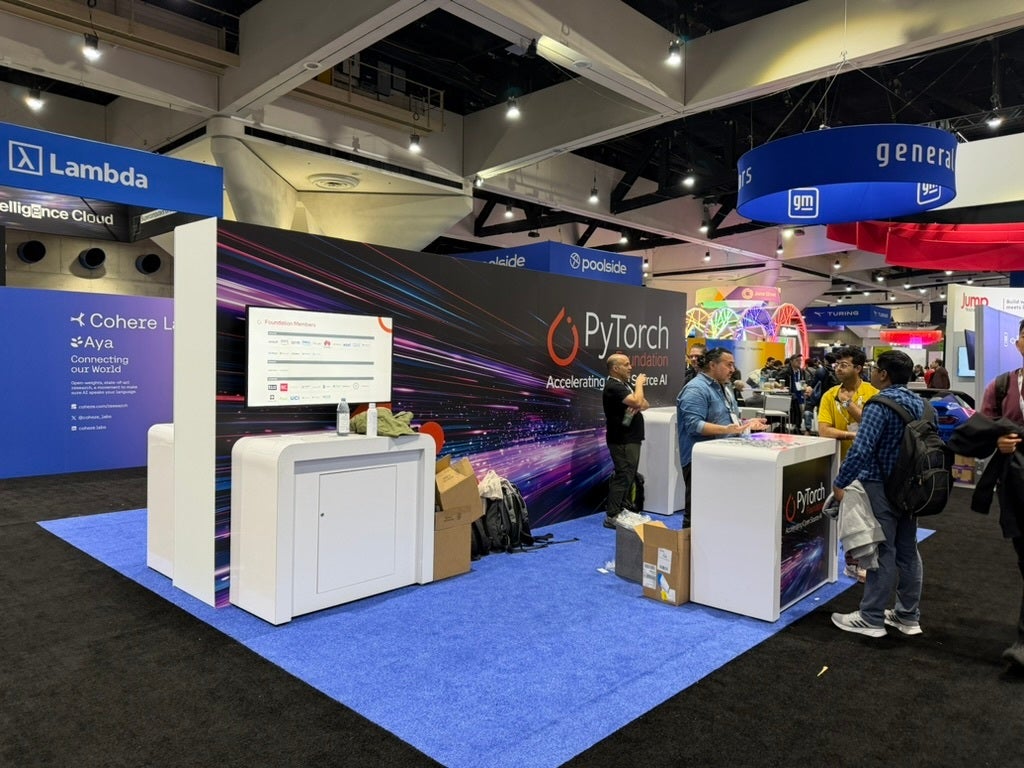
PyTorch Foundation participated as a Diamond sponsor of NeurIPS 2025 alongside the Cloud Native Computing Foundation. Our booth welcomed a steady flow of researchers, engineers, students, and industry attendees throughout the week. The booth was staffed with volunteers from the community, speaking about PyTorch, vLLM, DeepSpeed, Ray, and other ecosystem projects.
Our PyTorch Foundation booth stayed busy all week at NeurIPS, welcoming university researchers from around the globe alongside industry engineers tackling real-world challenges in robotics, finance, and more.
Attendees discussed practical deployment tips, how to get the most from the PyTorch ecosystem for faster ML workflows, and what’s coming in our 2026 training programs. The PyTorch Foundation team, along with contributors from NVIDIA and Meta, were on hand in the booth to answer questions and connect with the open source AI community.
Community Engagement Throughout the Week
Attendees connected with PyTorch maintainers and ecosystem contributors across workshops, hallway conversations, co-located gatherings, and informal meetups. The conference also brought visibility to ongoing work in performance optimization, agentic systems, on-device inference, and PyTorch’s expanding ecosystem of community-driven projects.
Thank You to the Community
Thank you to everyone who attended our sessions, visited our booth, participated in discussions, or joined the Open Source AI Reception. We appreciate the researchers, maintainers, students, partners, and collaborators who took the time to connect with us and share feedback, ideas, and contributions.